
Clinically AI · Privacy Zone Program
Aurelia.
Privacy you can feel.
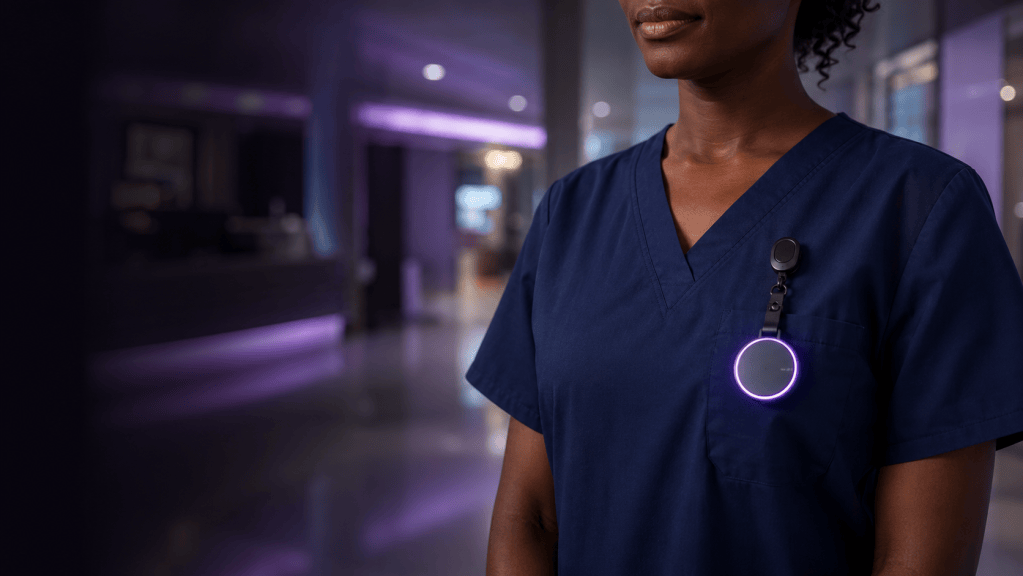
A discreet wearable concept that gives clinical staff silent, private awareness when known smart-glasses-class Bluetooth signatures are detected nearby. No cameras. No microphones. No cloud logging. Built by a clinician, for privacy-aware bedside workflows.
The Problem
The problem nobody can see anymore.
Recording used to be obvious: a raised phone, a pointed lens, a visible camera. Now it may look like ordinary glasses, a phone running an AI scribe, or an assistant that transcribes every word in range.
Clinical spaces carry a special burden. A waiting room, treatment chair, triage desk, or bedside conversation may include other people’s health information, not just the person using the device.
Aurelia restores awareness without turning the room into an alarm system.

Recording-aware spaces
Smart glasses, AI scribes, and phones changed the privacy problem.

How Aurelia Works
Passive signal awareness. Silent response. No public alarm.
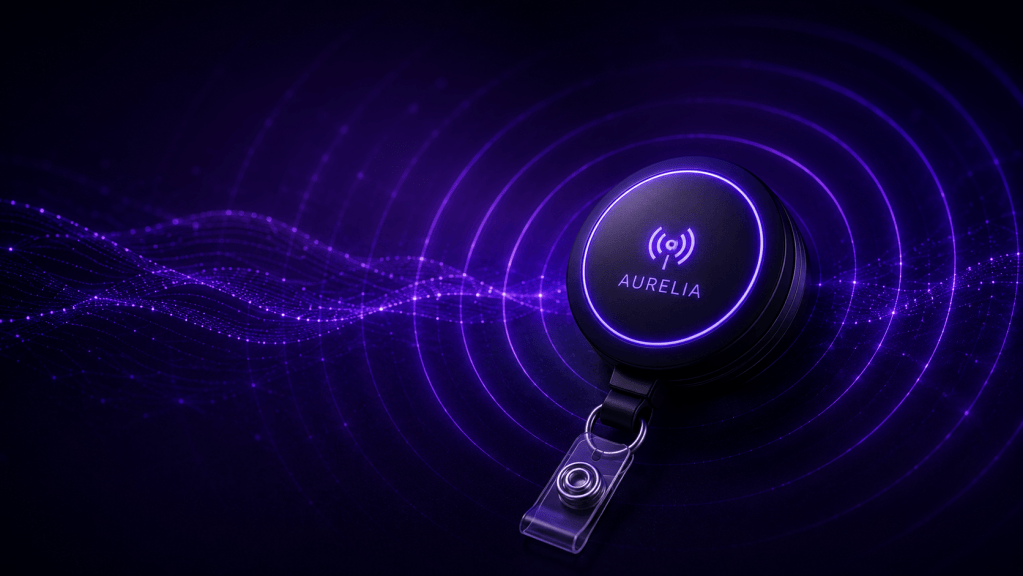
Recording-capable smart devices often announce themselves over standard wireless signals so they can pair, sync, and connect. Aurelia’s concept is simple: listen passively, look for known signatures, confirm the pattern, and alert only the wearer.
Design Commitments
Built around what it does not collect.
Aurelia is designed for awareness, not surveillance. The goal is to give clinical staff a private cue without collecting audio, video, identifiers, timestamps, or patient information.
Passive by design
Aurelia only receives. It transmits nothing, connects to nothing, and interferes with nothing.
Private by design
No logs, no timestamps, no identifiers, no audio, no video, and no cloud storage.
Honest by design
Aurelia signals known recording-capable device classes. It cannot determine whether a device is actively recording.

The Room Layer
The Privacy Zone Beacon.
Aurelia protects the person. The Privacy Zone Beacon speaks for the room.
A small plug-in device for the front desk, nurse station, or clinical entry point, the beacon continuously announces the privacy zone over standard Bluetooth as a one-way broadcast pointing nearby scanners to the location’s published recording policy.
It does not scan, listen, log, identify people, or interfere with any device. It simply makes the privacy zone visible to the systems people increasingly bring with them.
Open Standard
An open standard, not a walled garden.
Clinically AI is developing the Privacy Zone Beacon Specification as an open, implementable signal format so device makers, AR platforms, AI assistants, and privacy-aware tools can recognize posted privacy zones and respond appropriately.
The specification is not a recording blocker, privacy guarantee, legal policy, compliance certification, jammer, or enforcement tool. It is a notice layer designed to make privacy expectations clearer and easier to honor.

Complete Program
Part of the Clinically AI Privacy Zone program.
Aurelia and the Beacon are the hardware concepts. The Privacy Zone program also includes digital tools practices can implement sooner: badge visuals, signage, scripts, QR pages, and policy-support language.


Privacy at the bedside should not depend on spotting a camera by eye.
Founder-Led
Built by a clinician for the people at the bedside.
Clinically AI LLC is founded and led by Danii Holmes, MSN, RN, CCRN, NI-BC, with a background in critical care nursing, nursing informatics, nursing professional development, and healthcare AI education. Aurelia exists because privacy at the bedside should not depend on spotting a camera by eye.
MSN · RN · CCRN · NI-BC · NSF SHINE Fellow
Launch List
Aurelia is in active development.
Join the list for launch news, Privacy Zone Beacon availability, specification release updates, and early implementation opportunities.
Aurelia and the Privacy Zone Beacon support privacy-protective practices; they are not legal advice, not a compliance certification, and do not block, prevent, jam, or detect active recording. Practices should review policy language with their own counsel.